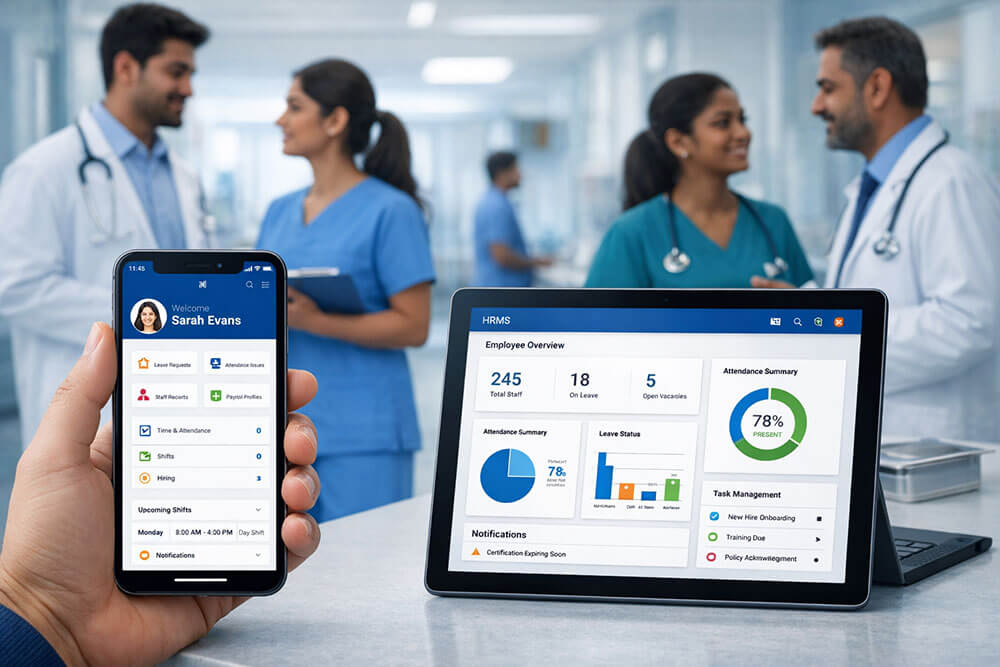
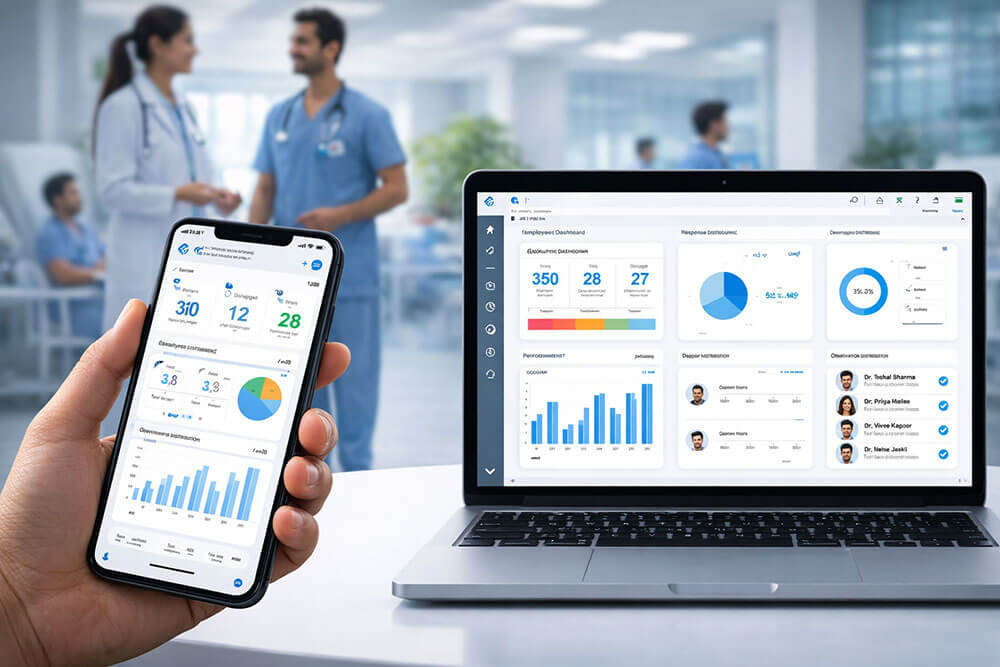
The management of healthcare human resources requires greater effort than any other industry because hospital operations create difficulties. Hospitals maintain round-the-clock operations which require staff scheduling to occur without any interruptions throughout different time periods. The facility needs to organize its staff members because doctors, nurses and support personnel must be present at all times.
The healthcare HR software helps address these challenges by automating workforce planning and ensuring the right staff is scheduled at the right time. The HR department in hospital settings must also handle emergency staffing situations when patient needs force unexpected changes.
HR departments in healthcare settings must oversee three different types of medical personnel, which include contracted doctors, visiting consultants and permanent employees. The system creates difficulties for organizations because their payroll operations, employee attendance records and compliance verification processes need to be managed together.
Healthcare institutions need to meet various regulatory requirements. Organizations face financial penalties for every compliance violation or payroll mistake. The process becomes more challenging because organizations need to handle all aspects of employee benefits together with nighttime work and overtime hours.
Healthcare HR management is more complex because hospitals operate 24/7 and need staff for multiple shifts, and must comply with strict labor and medical regulations.
What Is HR Software for Healthcare?
A specific system created to meet the particular requirements of clinics, hospitals, and other medical facilities is known as healthcare human resources software. Medical HR software has been designed to handle the unique challenges of the healthcare workforce, in contrast to general HR software, which is made for a variety of businesses.
HR Challenges Faced by Hospitals & Healthcare Providers in India
Healthcare professionals and hospitals in India face multiple HR challenges which directly impact their ability to deliver effective patient care services. The following factors interrupt their ability to deliver effective healthcare services.
- Staffing shortages: There is a continuous lack of doctors, nurses and support staff because patient numbers keep increasing.
- Night shifts: Hospitals need their employees to work night shifts and irregular hours because they operate continuously throughout the week.
- Payroll errors: The combination of complex salary structures and overtime calculations, together with manual payroll processing, usually causes payroll errors which delay employee payments and create dissatisfaction among workers.
- Compliance: Healthcare organizations must adhere to both labour regulations and healthcare industry standards. Organizations that fail to comply with these standards face both financial penalties and legal problems.