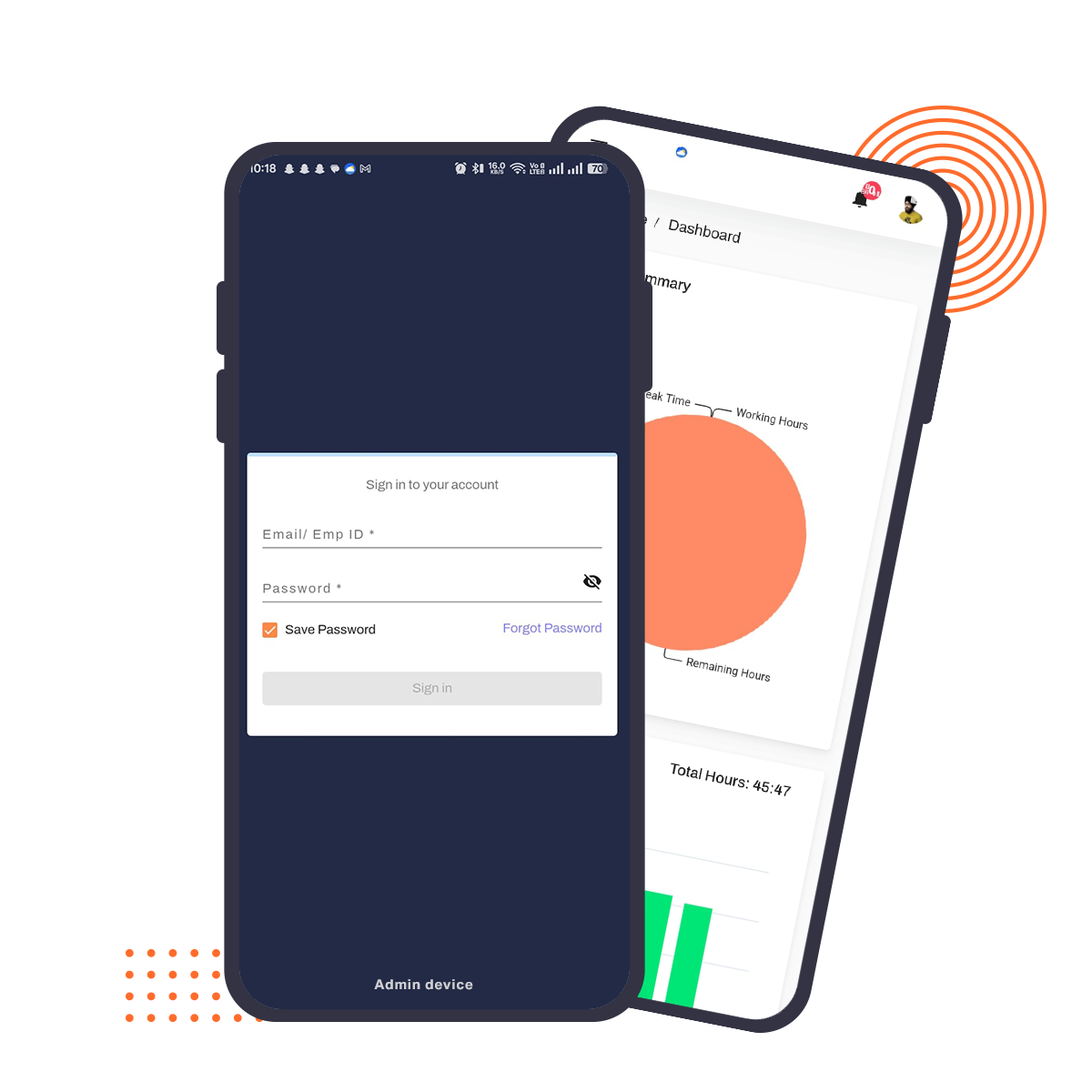
Employee engagement software is a tool that helps organizations measure and improve how connected, motivated, and satisfied their employees are — through pulse surveys, real-time feedback, recognition programs, and engagement analytics. HelixtaHR's engagement platform combines all of this with your existing HRMS, so engagement data connects directly to attendance, performance, and payroll.









Employee engagement software helps organizations understand how employees feel about their work, their team, and the company — and gives HR and managers the tools to act on that information. Instead of relying on annual reviews or informal conversations, engagement platforms collect structured, ongoing feedback through short surveys, recognition tools, and analytics dashboards.
At its core, engagement measures three things:
Engagement software turns these qualitative signals into trackable metrics — survey scores, eNPS, retention trends — that HR and leadership can act on before problems show up as attrition.
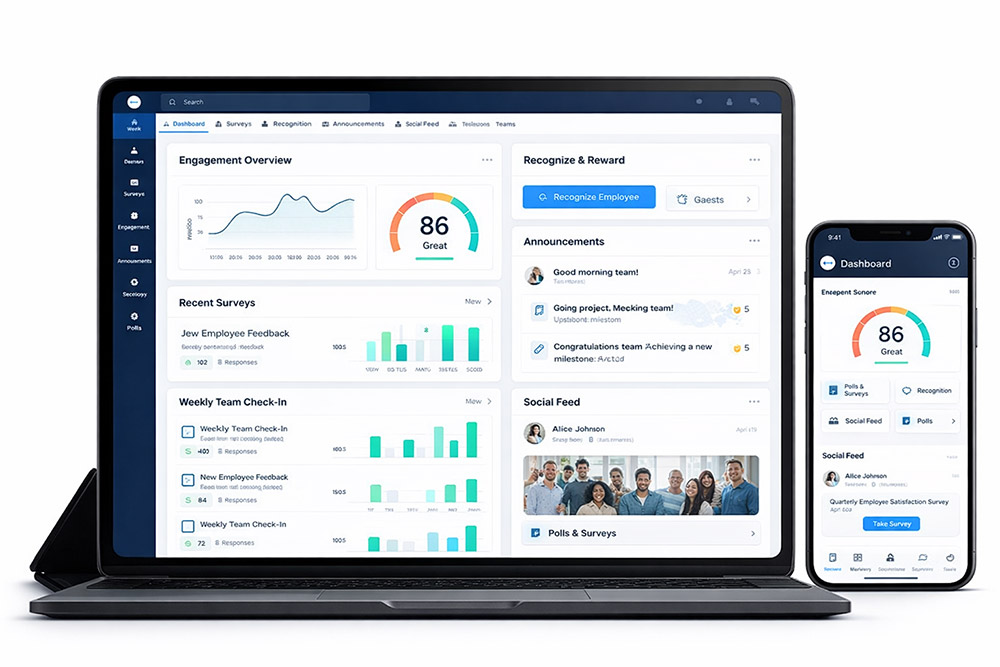
A solution designed to help organizations continuously listen, improve, and engage employees at every level.
Employee engagement measures the emotional commitment and work dedication which employees demonstrate toward their organisation. Engaged employees demonstrate higher productivity levels, which result in greater loyalty to their employer and better alignment with company objectives. This combination leads to improved business performance throughout the entire organisation.
Key Elements of Employee Engagement:
Engagement software offers companies HR software solutions through which their employees become more satisfied and productive in their work.
The survey system enables users to create surveys which they can schedule and use to assess employee opinions.
The system gathers feedback continuously to monitor employee issues and their proposed solutions.
The system provides detailed reports which enable users to monitor engagement scores together with their associated trends and insights.
The organization uses short surveys, which they conduct at regular intervals to assess how engaged employees currently are.
The organization uses recognition programs together with reward systems to motivate their workforce.
The organization uses performance tracking to connect individual employee objectives with their business goals which leads to better productivity outcomes.
Users can engage with the system through their mobile devices which provide them with access to engagement tools from any location.
Employee engagement surveys represent one of the best methods to gauge employee opinions about their work environment and leadership, and their complete work experience. The surveys enable organisations to collect organised feedback, which helps them identify employee satisfaction issues that need resolution through effective measures. Organisations can conduct regular survey assessments to gain valuable workforce data, which helps them to make better decisions about their future staffing requirements.
Types of Employee Engagement Surveys
Pulse surveys are short, frequent surveys which businesses use to assess employee emotions. The surveys are conducted every month or every three months to assess particular aspects of employee performance. It includes their ability to handle work responsibilities, their capacity to work together with others and their relationship with their supervisors.
The annual engagement surveys assess multiple organisational aspects by evaluating employee job satisfaction, company culture, leadership capabilities and employee career development. The surveys deliver precise data about employee engagement throughout the organisation. It also enables organisations to monitor engagement changes over different time periods.
The process of conducting lifecycle surveys enables organisations to gather feedback from employees throughout their entire employment period which starts from onboarding and continues through job transitions until employees leave the company. The surveys enable organisations to evaluate employee experiences during essential times while identifying specific areas which require improvement in their hiring practices and training programs and methods of keeping employees.
The assessment shows how satisfied employees are with their job responsibilities and payment structure, and their ability to control their work schedule. The assessment shows whether employees experience job satisfaction, which leads to their work motivation.
The assessment measures employee perceptions of their workplace environment. The assessment tests employees on their ability to work with different teams while their department skills in team communication.
Employees use their evaluation of management performance to assess their perceptions of workplace leaders. The assessment covers four areas, which are how managers interact with employees and how they share information, how they choose to make decisions and how they assist their workforce.
Employees require knowledge of their professional development paths because these paths provide them with both learning opportunities and career advancement possibilities. The absence of career development opportunities leads to employee disengagement at organisations.
The proper questions need to be included because they will help you achieve valuable feedback which you can take action on. Some commonly used questions include:
The measurement of employee engagement helps organisations determine the degree of workforce connection and job fulfilment. The HRMS Software enables the identification of existing gaps. It also monitors their progress and implements evidence-based solutions which improve employee satisfaction. The most precise method to determine engagement status involves using both quantitative data and qualitative information.
eNPS serves as an essential measurement tool that helps organisations assess the dedication level of their employees. The measurement system uses one basic question to determine employee loyalty. Employees at work use a 0-10 rating system to show their level of satisfaction which results in their classification as either promoters or detractors. The eNPS score grows when employees show increasing satisfaction with their workplace and their dedication to the organization.
The engagement survey scores present organisations with direct data which shows how employees feel about different aspects of their work, including job satisfaction, leadership and workplace culture and career development opportunities. The scores assist organisations in monitoring employee engagement patterns throughout different time periods. They also assess particular sections of their operations which require enhancements.
The retention rate metric shows what percentage of employees continue to work for the company during a specific duration. High retention rates demonstrate that employees remain highly engaged with their work. The organisations which experience high employee turnover face difficulties in maintaining employee satisfaction and their organisational culture and staff development opportunities.
Employee productivity links to employee engagement because work performance directly depends on employee engagement levels. The organisation uses task management software for task completion rates and efficiency levels, and performance outcomes to measure employee work engagement.
The employee engagement software has been created to support different organizational roles which enable all stakeholders to develop a workplace environment that promotes both employee engagement and productivity.
HR Teams – HR professionals use employee engagement tools to monitor overall engagement levels across departments and teams. HR employees use this data to analyze survey results. It helps them identify trends and create targeted initiatives for employee satisfaction improvements. HR teams use these insights to develop better policies which create better workplace culture while decreasing employee turnover rates.
Managers – The team engagement process requires managers to handle their critical function. The team engagement data and real-time feedback system. It enables managers to identify team problems and develop solutions to create a positive work environment.
Employees – The platform provides employees with employee self service a platform to share their feedback, opinions and their concerns. It helps employees in developing trust and involvement when they see that their contributions have an impact on their workplace.
The tools for employee engagement provide essential support for building a workforce that performs at its highest level because they establish employee motivation. The tools enable organizations to replace their current methods, which rely on guesswork with a method that uses data to support decision-making processes. Here are the key benefits of using Employee Engagement Tools:
Improves Employee Retention: Employee Engagement Tools help in tracking good and loyal employees, which improves retention rate. Engaged employees who are loyal result in cost savings as companies spend less on hiring and training new workers.
Enhances Productivity: Employees who receive recognition for their work produce better results because they want to achieve organizational objectives.
Enables Data-Driven Decisions: HR teams and leaders utilize current analytics and reporting tools to make employee-focused decisions which replace their past practice of relying on guesswork.
Builds Positive Workplace Culture: The process of transparent communication together with recognition and feedback activities establishes a workplace atmosphere which helps teams build trust and work together.
Strengthens Employee Experience: Continuous engagement initiatives improve satisfaction across the employee lifecycle.
Employee engagement support has multiple tools which address different parts of the employee experience. Organizations can achieve better results through engagement by using multiple tools which enable them to connect with all their points of contact.
Survey Tools: Used to collect structured feedback through pulse, annual, and lifecycle surveys.
Feedback Tools: Enable continuous, real-time communication between employees and management.
Recognition Platforms: Allow organizations to reward and appreciate employee contributions.
Employee Monitoring Software: Tracks productivity and work patterns to identify engagement levels and performance gaps.
Attendance Software: Provides insights into employee attendance managmement system, punctuality, and work habits.
The combination of engagement software with HRMS systems creates a complete human resources system. The solution enables HR teams to manage employee records while tracking performance indicators and obtaining essential data for effective workforce administration. Key Integrations Include:
Payroll Systems: The payroll system calculates payroll through employee data while establishing a link between employee satisfaction and their received compensation and benefits.
Attendance Systems: The system monitors employee behavior by tracking their attendance which includes both absenteeism and burnout.
Performance Management: In addition to integrating the engagement initiatives and performance goals, the system also offers insight on the impact of engagement on productivity.
Employee engagement tools are beneficial for all sizes of businesses. Here are some crucial industries that should avail benefits of Employee Engagement Software:
Startups: Build strong company culture from the beginning
SMEs: Improve retention and employee satisfaction
Enterprises: Manage large and diverse workforces
Remote Teams: Maintain communication and engagement across locations
Give your team the tools to share feedback, stay connected, and feel valued at work.
as per your needs, without any risk
Starting from
Disengaged employees don't leave loudly — they quietly do the minimum, stop contributing ideas, and eventually exit. By the time attrition numbers rise, the underlying dissatisfaction has usually been building for months. Engagement software exists to catch that earlier.
Regular pulse surveys surface dissatisfaction before it turns into resignations, giving HR time to intervene.
Employees who feel heard and recognized are measurably more likely to go beyond baseline expectations.
Instead of assuming what employees want, engagement analytics show exactly where satisfaction is dropping — by team, department, or tenure.
As headcount grows, informal "walk around and ask" management doesn't scale. Structured tools keep culture intentional instead of accidental.
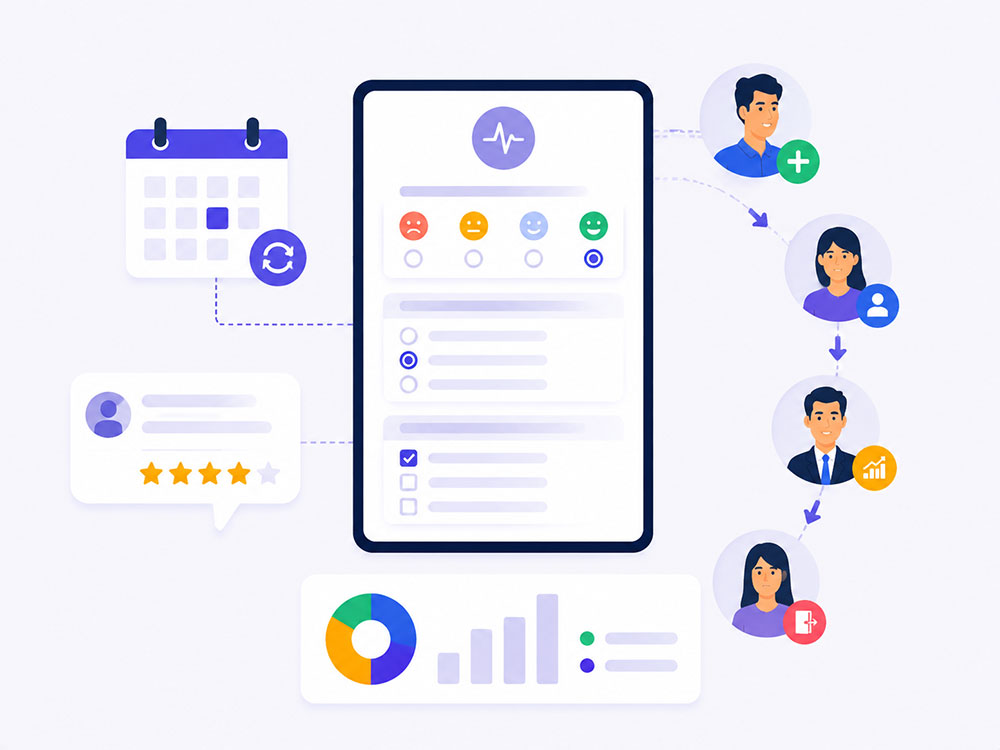
Short recurring surveys plus onboarding-to-exit lifecycle feedback
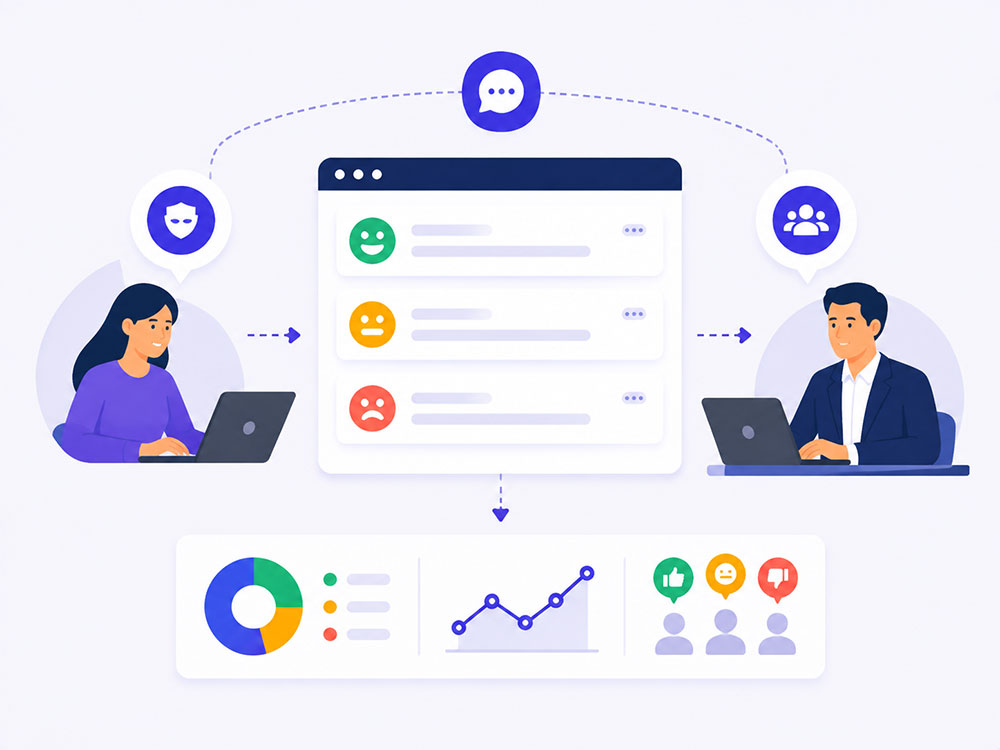
Continuous, anonymous input channel between employees and management

Peer-to-peer and manager recognition programs to reinforce good work
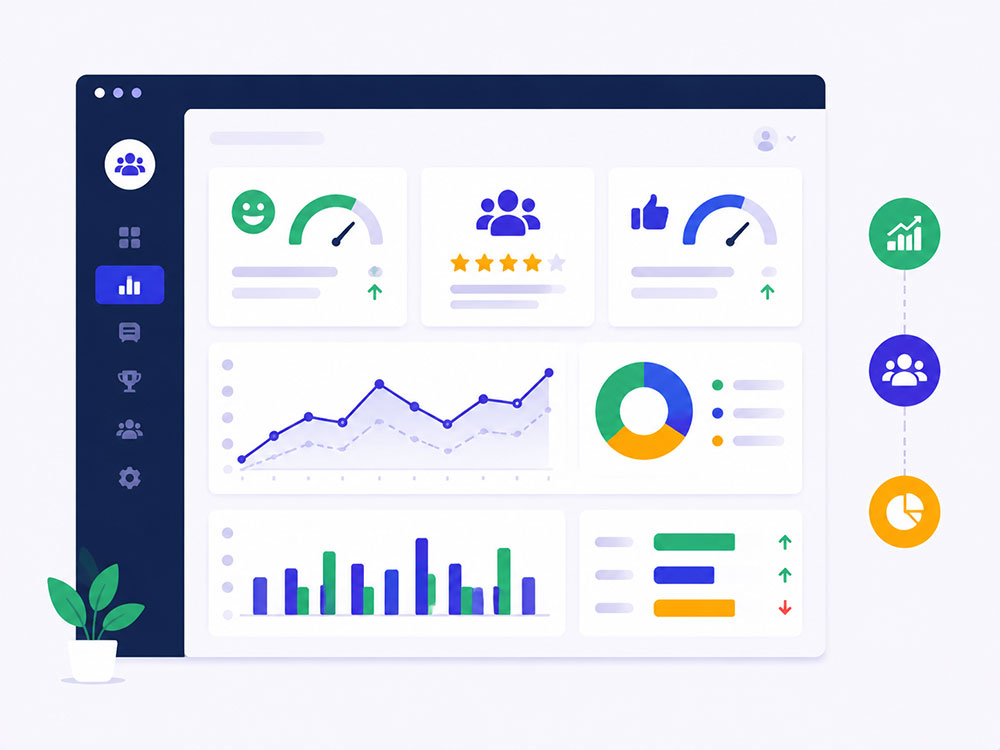
Dashboards tracking engagement scores, eNPS, and trends over time

Links individual goals to team and company objectives

Team updates and announcements in one place
Join 500+ brands using HelixtaHR to simplify payroll, attendance, compliance, and employee management in one smart platform.
Get Your Free Demo
Short, frequent (monthly/quarterly) check-ins on specific themes like workload or team dynamics.

Comprehensive assessment covering job satisfaction, culture, leadership, and career development.

Feedback collected at key moments — onboarding, role change, exit — to catch issues tied to specific transitions.
A single 0–10 question ("How likely are you to recommend this company as a place to work?") that classifies employees as promoters, passives, or detractors.
Direct, trackable data on satisfaction across specific dimensions like leadership and culture.
The percentage of employees who stay over a given period — a lagging but reliable engagement indicator.
Task completion rates and performance outcomes, which typically correlate with engagement levels.
Engagement data is most useful when it's connected to the rest of your HR system, not sitting in a separate tool.
Links engagement trends to compensation and benefits satisfaction.
Cross-references attendance patterns (absenteeism, burnout signals) with engagement scores.
Ties engagement initiatives directly to goal-tracking and appraisal cycles, so HR can see whether engagement efforts actually move performance.
Engagement survey responses are sensitive — employees need to trust that honest feedback won't be traced back to them without reason.
Survey and feedback data are encrypted in transit and at rest
Managers see team-level trends only; individual anonymous responses stay protected
Every action (apply, approve, modify, cancel, delete) is permanently recorded with a timestamp
Pulse survey results are aggregated to protect individual respondents
Every action on the platform is logged for compliance review
99.9% uptime SLA with automated backups
Designed to support engagement across different work environments and business needs.
| Task | Manual Process | With Engagement Platform |
|---|---|---|
| Gathering feedback | Informal conversations, annual review only | Structured pulse + lifecycle surveys |
| Spotting attrition risk | Noticed after resignation | Flagged by declining survey/eNPS trends |
| Recognition | Ad hoc, inconsistent | Structured peer & manager recognition program |
| Tracking culture over time | No consistent data | Dashboards tracking scores by team/quarter |
Employee Self-Service: View payslips, request leave, update personal details, and track attendance in one place.
Time Clock: Clock in and out securely with real-time sync for accurate attendance records.
Approvals on the Go: Review and approve leave requests, attendance updates, and tasks instantly.
Stay Connected: Receive important notifications, policy updates, and announcements directly on your phone.

Don’t delay anymore, book a free demo today and see how HelixtaHR can revolutionize your HR process!