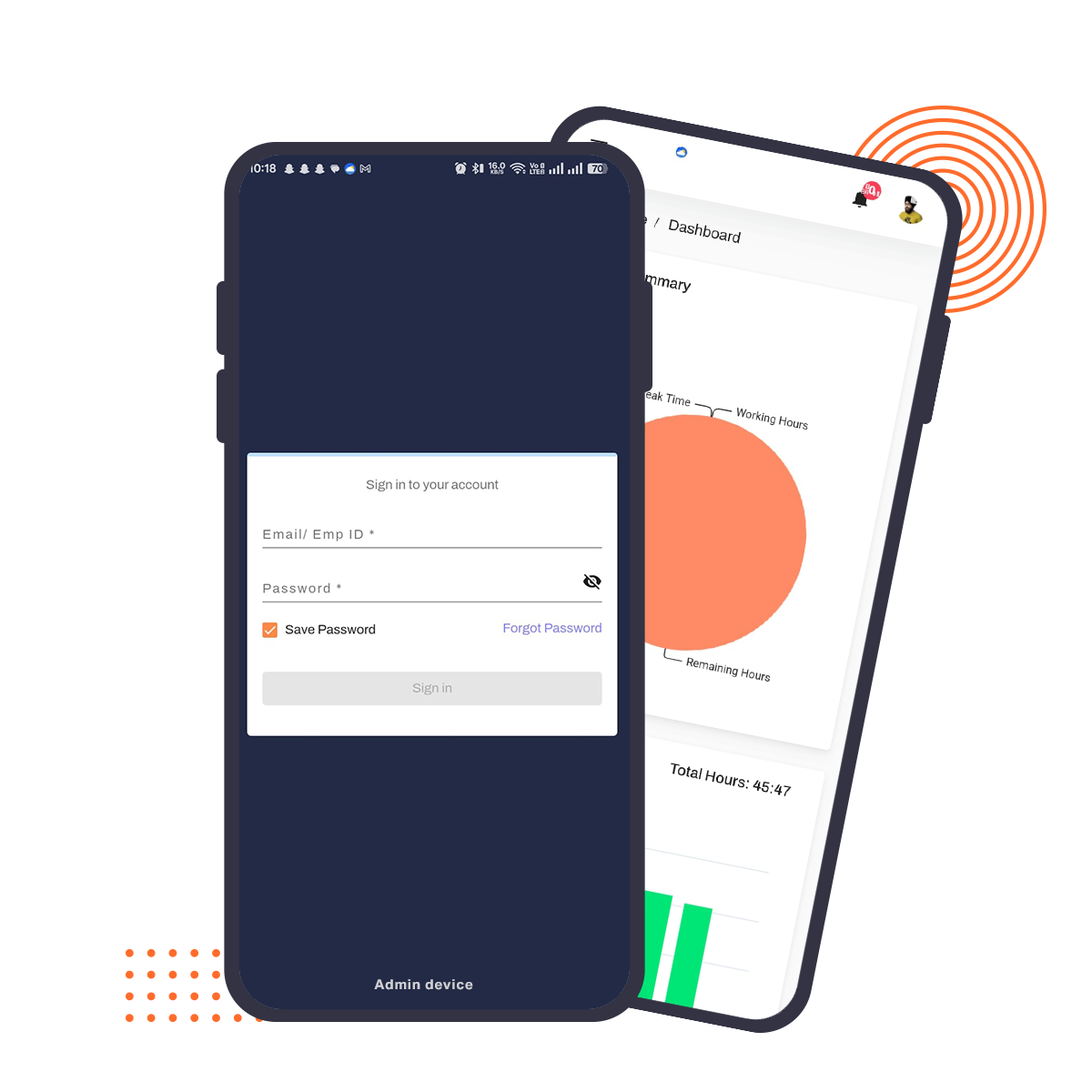
HR Management using spreadsheets is perfectly feasible when there are only 10 employees but totally unfeasible once there are more than 50 people. The HR management software eliminates manual payroll processing, disparate attendance sheets and rush work for regulatory compliances by providing a single platform tailor-made to suit Indian businesses. HelixtaHR is a cloud-based HR management system trusted by 500+ organizations across India to manage payroll, PF, ESIC, TDS, attendance, leave and the entire employee lifecycle from one dashboard.
Book a Demo Now View Pricing






HR software is an online system that automates all the tasks associated with Human Resources like recruitment, employee onboarding, attendance, leave management, payroll, performance management and compliance with the rules laid out.
In India, there is a particular and critical function performed by HR software in addition to automation and it relates to compliance with Provident Fund, Employee State Insurance, Professional Tax and Tax Deductible at Source rules which differ from state to state and keep changing quite often. In any organization that employs people, it is not an optional requirement but a must.
The essence of HR software is the following five functions: it assists in recruitment of employees; management of their attendance and records; payroll processing; performance management; retention by engaging with them – everything in just one application instead of five separate spreadsheets.
HR software in India is typically priced on a per-employee, per-month (PEPM)model, which makes cost predictable as
your team grows or shrinks. Pricing generally falls into a few bands:
| Plan | Starting price | Included users |
|---|---|---|
| Professional | ₹35/mo | Up to 50 users |
| Executive (most popular) | ₹65/mo | Up to 50-100 users |
| Enterprise | ₹90/mo | 100+ users |
What to watch for beyond the headline price: setup or implementation fees, charges for additional modules (some vendors price payroll and core HR separately) and minimum seat commitments. A transparent vendor will show you a complete cost breakdown before you sign — not just the per-user rate.
HelixtaHR's plans start at ₹35 per employee per month, with no contractual lock-in and no hidden implementation charges.
*Pricing is indicative and subject to change based on modules selected and employee count. Contact us for a custom quote.
View Pricing Plans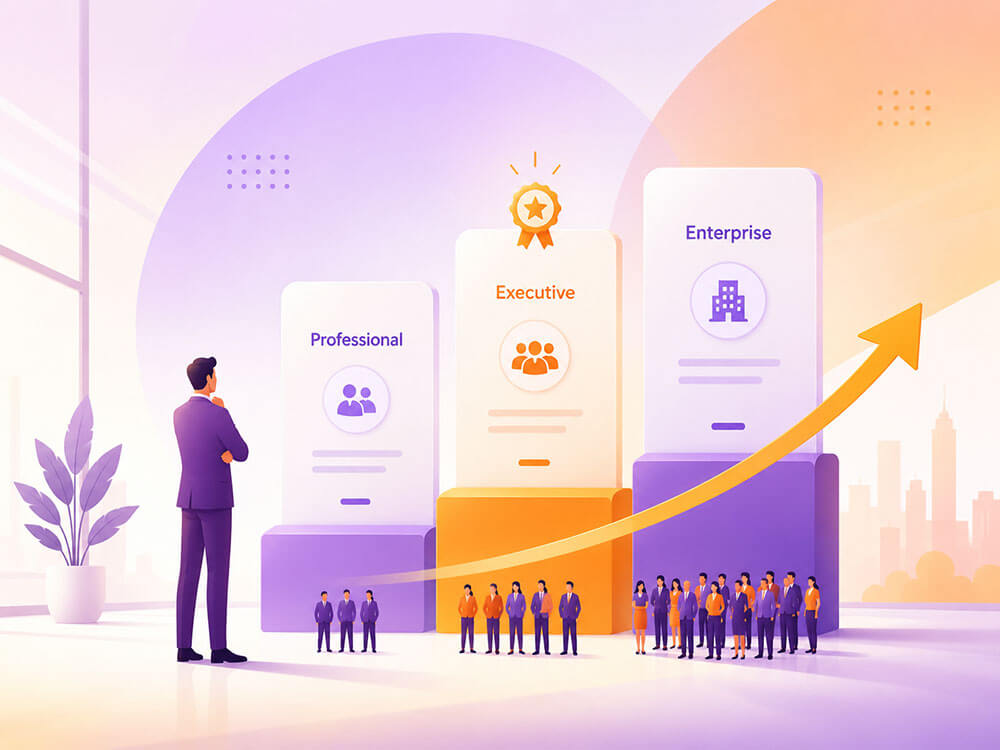
HR software works by consolidating all HR functions into a single connected system rather than managing each one separately.
Employee data enters once
When someone joins, their details are added once — this record then automatically feeds the attendance, payroll, performance and compliance modules, instead of being re-entered in five different tools.
Attendance and leave sync in real time
Employees mark attendance or apply for leave from the app; approvals happen instantly and leave balances update without manual reconciliation.
Payroll pulls directly from attendance data
At the end of the cycle, the system calculates salaries based on actual attendance, applies statutory deductions (PF, ESIC, PT, TDS) automatically and generates payslips — no manual computation required.
Compliance runs in the background
Statutory rates and rules update within the software as regulations change, so filings stay accurate without HR tracking every notification manually.
Reports and dashboards update live
Every action feeds real-time analytics, so HR and leadership can see headcount, attrition and cost data without compiling anything by hand.
Manual HR feels manageable right up until it doesn't. Here's what running HR on spreadsheets and paper actually costs a growing business:
HR software doesn't just digitize these processes — it removes the manual steps where errors happen in the first place.
as per your needs, without any risk
Starting from
A modern HR Management System (HRMS) is built around a set of core modules that together cover the full
employee lifecycle — from the day someone applies to the day they exit.
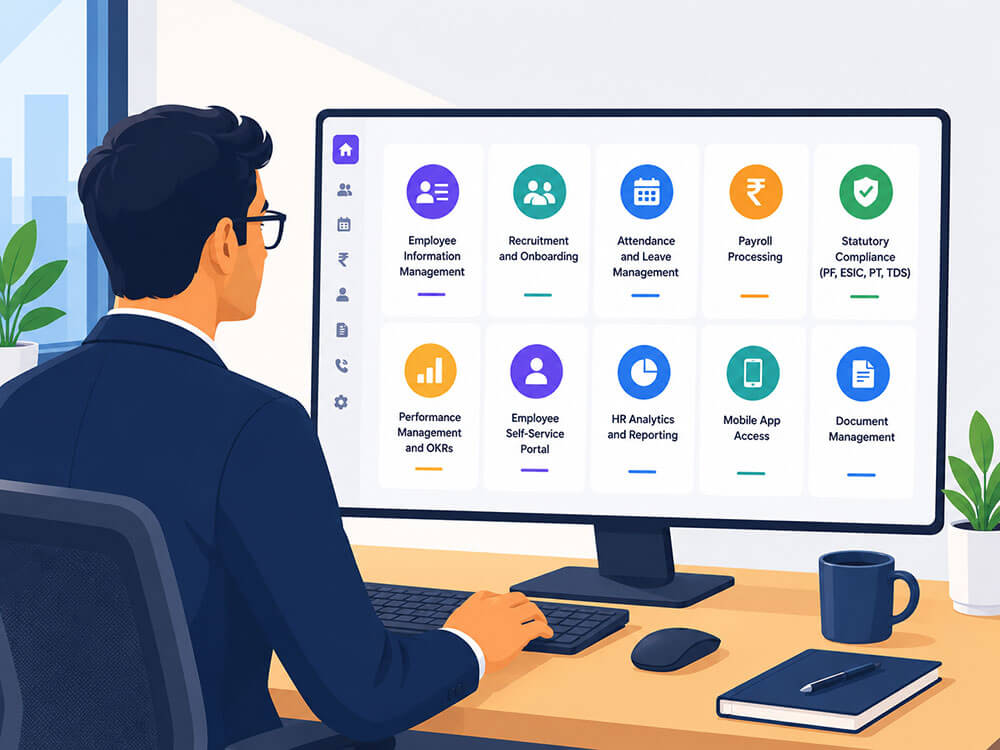
A centralized, searchable digital record for every employee — work history, performance data, qualifications, personal details and documents — replacing scattered spreadsheets and physical files. This is the foundation every other module pulls data from.
Tracking of applicants, automated documentation process, and onboarding workflow from the time an applicant is made an offer until the time he/she is all set up (accounts created, training, etc.) without any follow-ups. The better an organization can make the onboarding experience for its newly hired employees, the higher the retention rate is in months to come.
Mobile and biometric attendance capturing, real-time check-in/check-out monitoring, and leave balance calculations. Employees can apply for leave and log their attendance through mobile phones wherever they may be—in the office premises, at a client's location or even working from home.
It is in this domain that Indian HR software proves its worth. The payroll module helps in automating PF contribution calculations and compliance, ESIC compliance, professional tax (PT), TDS calculation and generating Form 16. Payslip preparation shows detailed calculations of earnings, deductions, and contributions.
With the help of Performance Management and OKRs, you can easily set goals for the employee for self-evaluation. This performance evaluation can be used directly in evaluations and promotion decisions. It is way better than data and feedback being stored separately on an Excel sheet.
Real-time dashboards and customizable reports that turn scattered HR data into decisions — headcount trends, attrition patterns, compliance status and workforce costs, all visible without manually compiling numbers from five different sources.
Join 500+ brands using HelixtaHR to simplify payroll, attendance, compliance, and employee management in one smart platform.
Get Your Free DemoA quick reference — the core modules that make up a complete HR software suite:
If a vendor's platform is missing more than one or two of these, you'll likely end up buying a second tool to fill the gap — which defeats the purpose of consolidating HR into one system.
Businesses using HR software typically cut HR operational time by up to 50%, since repetitive tasks like attendance reconciliation and payroll computation no longer require manual work.
Automated statutory calculations remove the human error that causes most compliance penalties and payroll disputes.
Payslip information, leave balance information, and personal details being available via self-service means fewer discussions and takes up less time for HR.
Every action — leave approval, payroll change, document upload — is logged with a timestamp, so you're never scrambling to reconstruct records during an audit.
Dashboards that display live information about the workforce, such as attrition rates, cost per hire, and headcount department-wise.
An employee management tool which is designed to handle ten employees should be able to handle one thousand employees as well.
| Feature | HR Software | Traditional HR (spreadsheets/paper) |
|---|---|---|
| Record Management | Centralized, searchable digital database | Paper files and spreadsheets, prone to loss and damage |
| Compliance | Automated statutory calculations, updated in real time | Manual tracking, high risk of errors and penalties |
| Reporting | Instant, customizable dashboards | Time-consuming manual compilation, delayed insights |
| Scalability | Scales from 10 to 10,000+ employees on the same system | Requires proportional increase in HR headcount |
| Security | Encrypted, role-based access, regular backups | Physical security risks, no reliable backup mechanism |
| Employee self-service | Payslips, leave, attendance accessible via app | Requires manual requests to HR for every action |
These two terms get used all the time interchangeably, but there is a real distinction between them, and it is worth knowing before you start comparing vendors.
HR software is the broader term. It covers any computer program built to handle an HR task, whether that is one narrow function like payroll or recruitment, or something more complete that touches several areas at once.
HRMS stands for Human Resource Management System, and it refers specifically to a suite that brings multiple HR functions together- core HR, payroll, attendance, performance management and compliance- inside one product.
Every HRMS counts as HR software, but not every piece of HR software qualifies as an HRMS. A standalone payroll tool is HR software. But once payroll, attendance, compliance, and performance management all sit inside one platform, the way they do in HelixtaHR, it becomes an HRMS.
Not all HR software solves the same problem. Understanding the categories helps you evaluate what you actually need:
Deals with the employee database, records, and basic HR processes. This constitutes the base layer.
Focused only on salary processing & compliance (PF, ESIC, PT, TDS). Some businesses use it separately, & some integrate with modern HRMS.
Includes recruitment, onboarding, performance management, and learning – "growth and development" part of HR.
Dedicated to surveys, rewards, and building culture rather than transactional HR processes.
Integrates HR Core, payroll, attendance and talent management functions in one connected suite. With the help of this HRMS, companies focus on growth and eliminate the need to having separate tools.
HCM goes beyond daily HR operations to treat employees as long-term assets, adding workforce planning, succession planning, and strategic analytics on top of core HR functions.
Free HR software looks appealing when you're just starting out, but the trade-offs become clear the moment your team grows past a handful of people.
| Factor | Free HR software | Paid HR software |
|---|---|---|
| Core features | Basic attendance, leave and limited payroll | Full payroll, compliance, performance and analytics |
| Compliance depth | Often limited or manual for PF/ESIC/PT/TDS | Fully automated statutory compliance, updated with rate changes |
| Employee limit | Usually capped (e.g., up to 50 employees) | Scales with pricing as headcount grows |
| Customer support | Minimal or community-based | Dedicated, responsive support team |
| Customization | Limited to fixed templates | Configurable to your leave policies, payroll structure, workflows |
| Data security | Often unclear or basic | Enterprise-grade encryption, audit logs, defined SLAs |
| Hidden costs | Feature paywalls appear as you scale | Transparent, predictable per-employee pricing |
Beyond digital vs. manual, there's a second, more technical choice businesses face: where the HR software itself runs.
| Aspect | Cloud HR software | Traditional / on-premise HR system |
|---|---|---|
| Hosting | Hosted by the vendor, accessed via browser or app | Installed and maintained on company-owned servers |
| Setup time | Live in hours to days | Weeks to months, requires IT involvement |
| Maintenance | Handled entirely by the vendor | Requires an in-house IT team |
| Updates | Automatic, including compliance rate changes | Manual updates, often delayed |
| Accessibility | Available from anywhere, any device | Typically restricted to office networks |
| Upfront cost | Low — subscription-based, per-employee pricing | High — hardware, licensing and IT infrastructure costs |
| Scalability | Scales instantly as headcount changes | Requires additional infrastructure investment to scale |
Selecting HR software in India can be task, especially based on the business requirements. And a single wrong decision that affects every employee and every payroll cycle. Therefore, it's worth evaluating carefully against a fixed checklist:
Your HR team shouldn't need extensive training. Look for a clean interface people can navigate on day one.
Confirm PF, ESIC, TDS and PT are actually automated end-to-end — not just listed as a feature in the sales deck.
The most important factor being software should be able to connect with tools that you need. Like Core HR with accounting, ERP, & communication platforms.
No hidden implementation fees, no surprise per-module charges. You should know your exact cost before signing up.
Your platform should be able to grow with you as you go from 20 to 2,000 people, without having to migrate.
It is recommended to look at encryption (AES-256 preferred), role-based access control, auditing and a clear data residency policy.
If your payroll fails on a Friday evening, you will need customer support. Preferably in Indian time zones.
Never commit to software you haven't tested. Reputable vendors let you explore the platform before you pay.
The right HR software depends heavily on how many people you're managing today — and how fast that number is expected to grow.
The priority is speed and cost. Look for software that can be set up in a day, handles PF and TDS from employee one and doesn't require a dedicated HR hire to operate.

It is at this stage where many manual processes begin to break down. Essential functions include core HR, automated payroll and leave management, as well as basic reporting on labor costs.

Key functions include performance management, enhanced analytics capabilities, as well as integration with accounting and ERP systems, among others.

Multi-site capabilities, more complex permission schemes, account management services and enterprise-class security (audit logs, data localization, etc.) become necessary features.
A common mistake is choosing software sized for today's headcount rather than next year's. Migrating HR platforms mid-growth is disruptive —
it's worth choosing a system, like HelixtaHR, that scales from startup to enterprise without forcing a switch later.
Every industry has different HR pressure points. Here's how HR software adapts to each:
HelixtaHR isn't built for a generic global market — it's built specifically for how Indian businesses operate, hire and stay compliant.
India-first design — Built around Indian labor law, state-wise Professional Tax rules and statutory compliance requirements from the ground up — not retrofitted from a US or global product.
Deep customization — From leave policies to payroll structures to attendance rules, the platform adapts to your company's specific workflows instead of forcing you into a rigid template.
Responsive support — A dedicated support team that responds quickly when issues come up — particularly important when payroll timing is on the line.
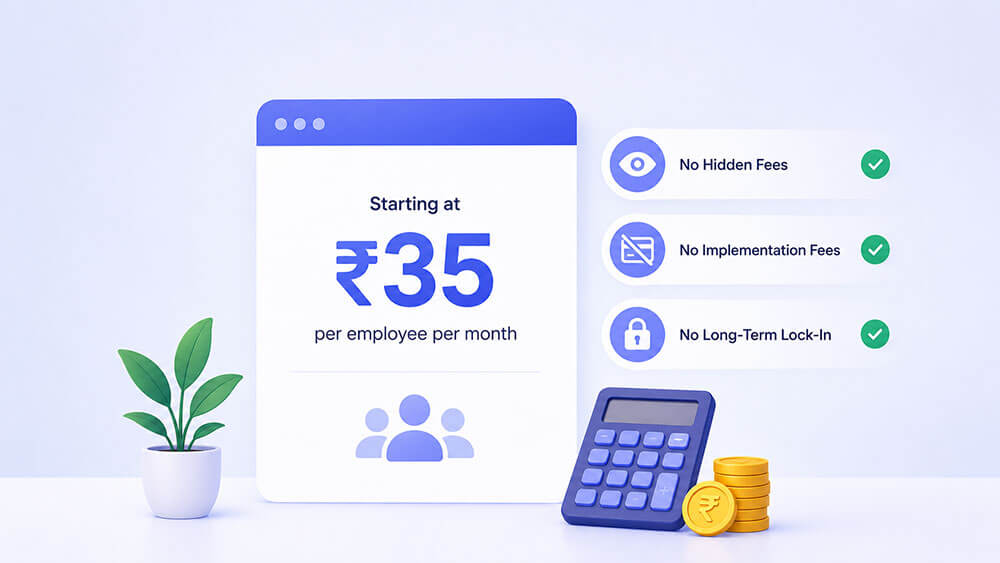
Transparent, affordable pricing — Plans starting at ₹35 per employee per month, with no hidden implementation fees and no long-term lock-in.
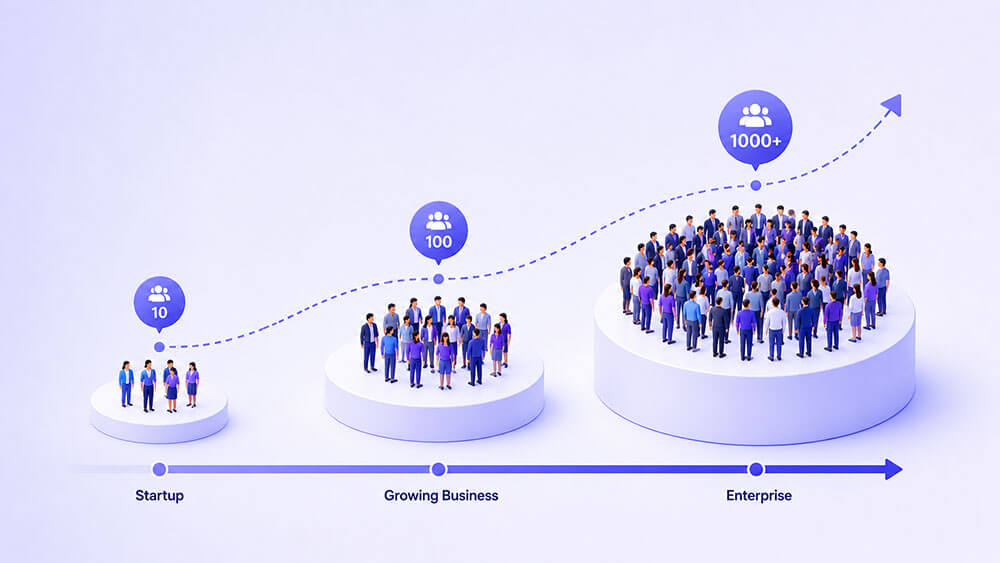
Built to scale — Whether you're a 10-person startup or a 1,000-person enterprise, HelixtaHR scales with you without requiring a platform switch.
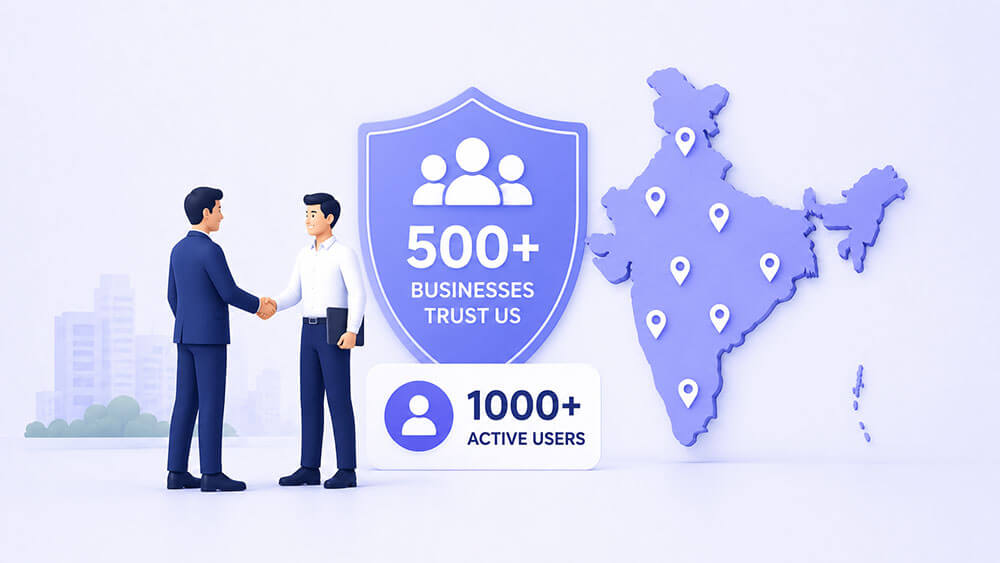
Proven track record — Trusted by 500+ businesses across India, with over a thousand active users on the platform.
Employee data includes sensitive information — salary details, medical records tied to leave and personal identifiers. HelixtaHR protects this data with security standards comparable to those used by financial institutions:
for all data, both in transit and at rest
employees see only their own data, managers see their team's data, HR sees the full picture
every action (apply, approve, modify, cancel, delete) is permanently recorded with a timestamp
with a 99.9% uptime SLA and automated daily backups
for full data recovery even in worst-case infrastructure scenarios
relevant for companies with international operations or employees
Employee Self-Service: View payslips, request leave, update personal details, and track attendance in one place.
Time Clock: Clock in and out securely with real-time sync for accurate attendance records.
Approvals on the Go: Review and approve leave requests, attendance updates, and tasks instantly.
Stay Connected: Receive important notifications, policy updates, and announcements directly on your phone.

Don’t delay anymore, book a free demo today and see how HelixtaHR can revolutionize your HR process!