Post In:
- HR Guide


HelixtaHR is India's leading HRMS software for payroll, leave, attendance and employee management — smart, AI-first HR technology designed to simplify work for businesses.

Contact Info
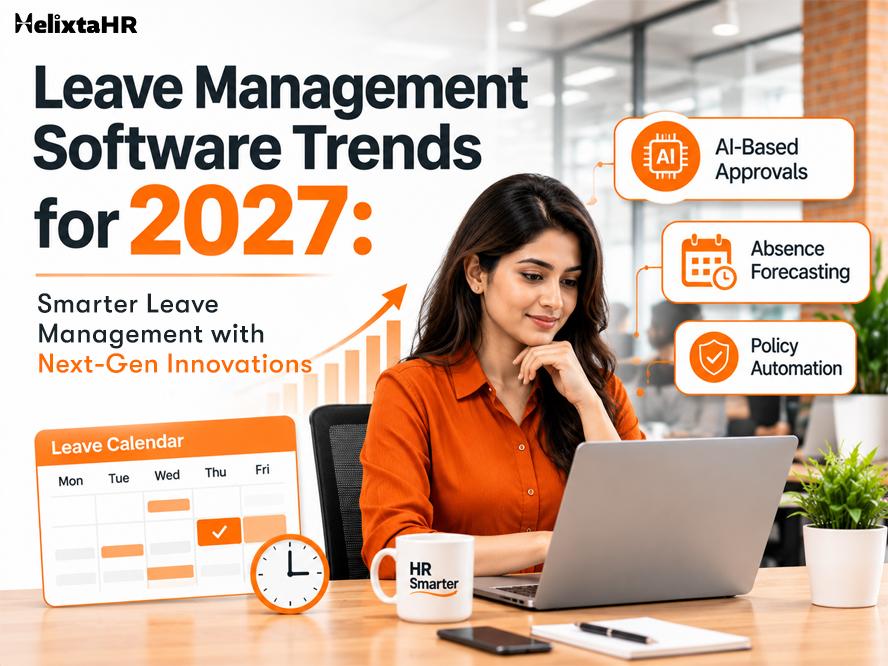
Three people have applied for leave on the same Friday. Each request was approved on its own, by a different manager, over a different channel. Nobody noticed until Thursday evening, when the team realised it had no one to cover the shift.
Leave management used to mean keeping balances and processing requests. It’s moving past that. Businesses now want visibility into absences, workforce availability and leave patterns before problems land. AI, predictive insights and workflow automation are shaping the next generation of tools. This article walks through the leave management software trends worth watching in 2027, and how to judge which ones matter for your business.
Traditional leave processes were built for record-keeping. They struggle with planning.
None of this is dramatic. It’s the slow drip of admin that makes HR reactive. By the time someone spots a staffing gap, it’s already a problem.
Automation changes the posture. When requests, balances, policies and approvals live in a connected system, HR moves from chasing leave to planning around it. These shifts are what’s driving the leave management software trends below.
A note before the list. These are emerging capabilities and likely areas of development, not guaranteed predictions of what every business will adopt.
AI-assisted workflows can check leave balances, eligibility and configured approval rules, then route the request to the right manager automatically. Managers see the relevant information before they approve or reject.
Picture an employee applying for two days off. The system checks the available balance, confirms the leave type is allowed and sends the request to the reporting manager with the context attached. No chasing.
One boundary matters. AI assists with the decision. Approval authority stays with the designated manager or authorised person. Automated leave approval should speed up the routine and leave the judgment calls to people.
Absence forecasting looks at historical leave patterns and upcoming approved absences. It flags periods when several people may be out at once and helps managers anticipate staffing gaps.
A retail business could review upcoming leave ahead of a festive season and plan store staffing weeks in advance, instead of scrambling during the rush.
Don’t oversell it. Forecasting can’t predict every absence. It identifies patterns and potential risks, not certainties. Think of it as a weather forecast for your roster, useful for planning and wrong sometimes.
Leave policy automation means digitising entitlement rules. Configure leave categories, eligibility and accrual rules. Apply approval workflows by role or department. Keep records consistent across teams.
The result is less manual interpretation. Two managers no longer read the same policy two different ways.
A caveat, though. Automation applies the rules you configure. If the policy changes, or the law does, someone has to review and update the setup. A wrong rule applied consistently is still wrong.
Employees want to apply for leave from their phones, check balances and request status, view leave history and read relevant policy information. Notifications on approvals and rejections close the loop.
Leave doesn’t live alone. Approved leave has to show up in attendance, and from there in salary inputs. When these systems are connected, HR stops re-entering the same data in two places.
Approved leave reflects in the relevant attendance records. Loss-of-pay calculations and leave balances become easier to follow. Nobody rebuilds a spreadsheet at month-end to find out who was away.
Accuracy matters more than speed here. Data moving between systems still needs HR verification before payroll is processed. A connected setup reduces repeated entry. It doesn’t remove the need for a check.
Most leave questions are small. “How many casual leaves do I have left?” “Can I carry forward unused leave?” “What’s the notice period for planned leave?”
Conversational AI lets employees ask in plain language and get answers based on the available HRMS data and their permissions. It can explain relevant policy information. In supported workflows, it can also help employees start a leave request or cancel one.
HR spends less time answering the same five questions every week. That’s the real gain. Not novelty, just fewer interruptions.
Leave data shows patterns. Track trends by department, location and time period. Review recurring absence patterns and the staffing problems behind them.
But leave data is also personal data. Use role-based access so people see only what their role requires. Keep approval workflows transparent and give employees a way to raise questions or corrections. And treat AI-generated recommendations as input, not verdicts. Someone accountable should review them.
Handled carelessly, analytics turns into surveillance. Handled well, it helps you plan.
The table below shows how AI-assisted leave management differs from the traditional approach.
| Traditional approach | AI-assisted approach |
|---|---|
| HR manually checks leave records | System retrieves relevant leave information |
| Managers follow up on requests | Automated approval routing |
| HR reviews spreadsheets for patterns | Analytics identify absence trends |
| Employees contact HR for policy queries | AI answers supported policy questions |
| HR manually coordinates processes | Connected workflows reduce repetitive tasks |
AI works best when it sits on accurate employee data, configured policies and clear approval rules. Feed it a mess and it’ll return a faster mess. It should assist HR and managers, not independently make sensitive employment decisions.
Before you shortlist, check for:
Weigh these against your workforce size, locations, policies and operational needs. Don’t pick a tool because it has an “AI” badge. A simple system that fits your policies beats a clever one that doesn’t.
HelixtaHR is an AI-powered HRMS that connects leave management with attendance, shifts and payroll workflows. Here’s what that covers:
Instead of handling leave requests, policy queries and payroll inputs separately, HelixtaHR brings these workflows together through automation and AI assistance. An employee asks about a balance and gets an answer. A manager reviews a request with the context in front of them. HR sees the effect on attendance and payroll without stitching it together.
HR still owns the policies, the approvals framework and the final check on payroll.
AI-assisted approvals, absence forecasting, policy automation and self-service are shaping where leave management goes next. Whichever leave management software trends you act on, put accurate records, transparent approvals, employee experience and responsible data handling first.
Leave is one thread in a larger system. Businesses that connect leave, attendance, payroll and recruitment software in one platform spend less time moving data between tools and more time using it.
HelixtaHR is an AI-powered HRMS that helps businesses simplify leave workflows, connect attendance with payroll and cut repetitive HR administration. Book a demo and see how your own leave policies would run on it.
AI-based approvals, absence forecasting, automated policy management, mobile self-service, attendance and payroll integration, conversational AI for leave queries, and better analytics with responsible data handling. These are emerging capabilities, not guaranteed industry predictions.
It checks balances, eligibility and configured rules, then routes requests to the right manager with relevant information. The manager or authorised person still makes the final decision.
It uses historical leave patterns and upcoming approved absences to flag periods of potential staffing gaps. It shows likely risks, not certainties.
Yes. Approved leave can flow into attendance records and payroll inputs, including loss-of-pay calculations. HR should verify the data before processing salaries.
Leave types, eligibility, accrual rules and approval workflows are configured in the system and applied consistently. The rules need review whenever policies or laws change.
